A business meeting may take only an hour, but getting there can take most of your day. Fixed airline schedules, connecting flights, crowded airports and long road journeys can make a simple business trip harder to manage than it needs to be.
That is why more business travellers are considering an executive aircraft charter when time, flexibility and privacy matter.
But choosing a charter is not simply about finding an aircraft and booking a seat. You need to consider the route, aircraft, schedule, number of passengers, airport accessibility and the total cost of the journey.
So, how do you compare your options and choose a charter that actually fits your business travel requirements?
Let’s look at the factors that matter.
What Is an Executive Aircraft Charter?
An executive aircraft charter is a privately arranged flight planned for a specific journey, rather than a seat purchased on a scheduled commercial airline.
Instead of working around an airline’s published timetable, the charter itinerary is planned around the travel requirements of the passengers, subject to aircraft availability, airport suitability and operational considerations.
For business travellers, this can be useful when:
An executive charter flight is therefore less about travelling in a particular type of aircraft and more about creating a travel plan suited to the business requirement.
Why Businesses Consider Private Charter for Business Travel
Time is often the most valuable part of a business trip.
A commercial flight may be the right choice for a straightforward route with frequent connections. But when the itinerary involves tight schedules, multiple destinations or significant road travel, the overall journey can become less convenient.
A private charter can offer greater control over the journey, including:
The right choice still depends on the individual journey. Charter is not automatically better for every business trip.
What Should You Compare Before Choosing an Executive Charter?
If you are comparing a corporate aircraft charter, look beyond the aircraft itself. The best option is the one that fits the complete journey.
1. Consider the Aircraft Type
Aircraft selection should start with your travel requirements.
Consider:
A larger aircraft is not necessarily the best choice for every trip. A smaller aircraft may be more practical for certain regional routes or smaller airfields, provided the airport and aircraft are operationally suitable.
Avenor Aviation’s Aircraft
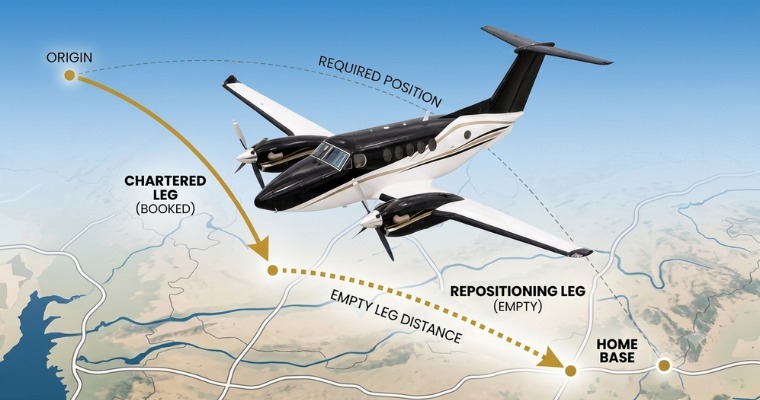
Avenor Aviation’s charter service is supported by a Beechcraft Super King Air B200, manufactured by Textron Aviation, with a Year of Manufacture (YOM) of 2006 and a Year of Refurbishment (YOR) of 2025.
The aircraft is powered by two Pratt & Whitney Canada PT6A-42 turboprop engines and has a maximum cruise speed of 260 knots (537 km/h).
The suitability of the aircraft depends on the specific route, passenger requirements and operational conditions of the proposed journey.
2. Look at the Route and Airport
The airport you arrive at can have a major effect on the total journey time.
A scheduled airline may take you to a major airport, followed by a long road journey to your actual business destination. Where a suitable smaller airfield is available, a charter may provide a more convenient alternative.
This can be particularly relevant for:
Avenor Aviation’s Beechcraft Super King Air B200 is intended to support regional connectivity, including access to suitable smaller airfields where operationally feasible.
However, airport suitability should always be checked for the specific aircraft and itinerary. Not every smaller airfield can accommodate every aircraft.
3. Compare Schedule Flexibility
A commercial airline operates according to its published schedule. Your business meeting does not.
This difference can become important when you need to attend an early meeting, make several stops or return home on the same day.
A charter itinerary can be planned around your requirements, subject to aircraft availability and operational considerations.
For example, a business traveller may need to:
Instead of building the trip around several commercial flight schedules, the charter itinerary can be planned around the business requirement.
4. Consider How Many People Are Travelling
Passenger numbers play an important role in selecting an aircraft.
An executive travelling alone has very different requirements from a group of six or more colleagues travelling together.
When several executives are travelling for the same business purpose, a private charter can also simplify coordination. Everyone can travel on the same planned itinerary instead of managing separate airline bookings and schedules.
Before requesting a quotation, provide the charter provider with the exact or expected passenger count. This helps the provider assess the appropriate aircraft and itinerary.
5. Think About Privacy and Productivity
Some business conversations are better held away from a shared cabin.
A private aircraft provides a more discreet environment for executives who need to discuss business matters, prepare for meetings or simply travel without the distractions of a commercial cabin. For some travellers, this can make travel time more useful.
However, onboard facilities can vary between aircraft and charter arrangements. If you need particular arrangements for work or passenger comfort, discuss them before confirming the flight.
Avenor Aviation places privacy and productivity among the key considerations of its private charter service.
6. Don’t Forget the Ground Journey
Saving time in the air does not help much if you spend several hours on the road after landing. This is why the complete journey should be considered when comparing corporate flight services.
Ask:
Avenor Aviation offers coordinated ground transfers as part of its approach to door-to-door travel.
7. Check the Onboard Requirements
Every business traveller has different expectations. Depending on the aircraft and charter arrangement, you may want to discuss:
These details should be discussed before the charter is confirmed.
A clear conversation at the beginning helps ensure that the proposed service matches what you actually need.
Executive Charter vs Commercial Business Class
The decision between an executive charter and commercial business class should depend on the trip, not simply on the perception that one is more premium.
For a simple route with frequent airline connections, business class may be the practical choice.
For a time-sensitive or complex itinerary, charter may offer advantages through flexibility and private travel.
Commercial Business Class
Executive Charter
The important question is not simply:
“Which is more luxurious?”
A better question is:
“Which option makes more sense for this particular business trip?”
How Much Does an Executive Charter Cost?
One of the most common questions about private aviation is:
How much does it cost?
There is no single price that applies to every charter.
The private jet charter cost or aircraft charter cost can depend on factors such as:
Why You Should Be Careful With Online Charter Prices
A price shown online may not represent the cost of your actual journey.
Two trips with the same number of passengers can have very different requirements.
For example, a short regional trip and a multi-city itinerary may involve different aircraft positioning, flight hours and operational planning.
This is why the private charter flight cost in India should ideally be discussed based on your actual itinerary rather than relying on a generic figure.
A useful charter quotation should make it clear what is included and what additional arrangements may affect the final cost.
Choosing between private jet charter companies or charter providers requires more than comparing quotations.
Before making a decision, ask the following questions.
What aircraft will be provided?
Understand the aircraft being proposed and whether it suits your route and passenger requirements.
Is the proposed route practical?
Ask about departure and arrival airports and the overall journey.
What is included in the quotation?
Make sure you understand the services covered by the quoted amount.
Are there additional costs?
Ask about any additional requirements that could affect the final price.
How flexible is the itinerary?
Understand how schedule changes and additional requirements are handled.
Can ground transportation be coordinated?
A good travel plan should consider the journey after landing as well.
Can onboard requirements be arranged?
Discuss meals, passenger preferences and other requirements in advance.
Who coordinates the journey?
A clear point of contact can make the experience easier, particularly when the itinerary changes.
Don’t Choose a Charter Based on Price Alone
The lowest quotation may not always be the most suitable option. When comparing charter proposals, consider the complete picture:
For a business traveller, the real value may come from reducing unnecessary travel time and simplifying a complicated itinerary.
If you are considering charter travel for the first time, the process starts with providing clear information about your trip.
Step 1: Share Your Requirements
Provide:
Step 2: Discuss the Itinerary
The charter provider can assess the proposed route, aircraft availability and operational requirements.
Step 3: Review the Aircraft and Proposal
Understand the aircraft being proposed, the planned itinerary and the services included.
Step 4: Review the Quotation
Ask questions about inclusions, additional requirements and any terms that are unclear.
Step 5: Confirm the Charter
Once the itinerary and commercial details are agreed, the necessary arrangements can be coordinated.
Step 6: Prepare for Your Journey
Confirm the final travel details, passenger information and any ground or onboard arrangements.
This simple process can make how to book charter flights in India much easier for a first-time traveller.
Private charter is not the right answer for every journey. But there are situations where it can be worth considering.
Same-Day Business Trips
When you need to attend a meeting in another city and return home the same day, schedule flexibility can make a significant difference.
Multi-City Business Travel
If your business requires meetings across several locations, a charter itinerary may allow the trip to be planned around the sequence of meetings.
Travel to Regional Business Locations
If your destination involves a long road journey from the nearest major airport, a suitable regional airfield may offer a more practical option.
Corporate Team Travel
When several executives need to attend the same meeting, event or site visit, travelling together can simplify the itinerary.
Time-Sensitive Meetings
When commercial flight schedules do not fit an important business requirement, a charter can be considered for greater scheduling flexibility.
Avenor Aviation: Charter Travel Built Around Your Journey
At Avenor Aviation, we believe private aviation should be built around the traveller’s requirements.
Our charter services are designed for corporate leaders, high-net-worth individuals and private travellers looking for safe, reliable and transparent travel solutions.
For business travel, our approach focuses on understanding the journey before proposing the charter arrangement.
That can include:
Our core values are Safety, Reliability and Transparency.
The aircraft, route and itinerary should always be selected according to the actual travel requirement.
Frequently Asked Questions
What is an executive aircraft charter?
An executive aircraft charter is a privately arranged flight for a specific journey rather than a scheduled commercial flight. The itinerary is planned around the travel requirements, subject to aircraft availability and operational considerations.
Is an executive charter suitable for business travel?
It can be useful when schedule flexibility, privacy, multi-city travel or access to suitable regional airports are important. For straightforward routes with frequent commercial flights, scheduled travel may still be the more practical choice.
How much does a private charter flight cost in India?
There is no standard price. Cost depends on the aircraft, route, flight duration, passengers, travel dates, aircraft positioning and other requirements. A quotation based on the actual itinerary is more useful than a generic price.
Can a charter aircraft operate from smaller airports?
It may be possible when the airport is suitable for the aircraft and the flight meets applicable operational and airport requirements. Availability and suitability should be confirmed for each journey.
Can an executive charter be used for multiple cities?
Yes. Multi-city itineraries can be considered based on the aircraft, route, schedule and operational feasibility.
How do I book a charter flight in India?
Share your departure location, destination, travel dates, passenger count and preferred timings with a charter provider. The provider can then assess the requirements and provide the relevant itinerary and quotation.
Is private charter better than business class?
Not necessarily. The better option depends on the journey. Business class can be practical for straightforward routes, while charter may be more suitable when flexibility, privacy, regional airport access or a complex itinerary are important.
Conclusion: Compare the Journey, Not Just the Aircraft
Choosing an executive charter is not simply about finding the most luxurious aircraft or the lowest quotation.
For business travel, the better question is:
Does this charter make the entire journey more practical for my business?
Look at the route, schedule, aircraft, passenger requirements, airport accessibility, ground travel and total cost before making a decision.
For some journeys, commercial business class will remain the sensible choice. For others, private charter can provide the flexibility and control needed to make a demanding business itinerary easier to manage.
At Avenor Aviation, we begin by understanding your travel requirements and planning the journey around them, with careful attention to timing, route, passenger needs and overall travel experience.
Avenor Aviation | Wings on demand