When Roads Are Cut Off: Why Air Transport Matters in Disaster and Humanitarian Relief

When a major disaster strikes, the immediate need is often clear: people need medical attention, food, water, shelter, rescue support and safe evacuation.

But there is another problem that can be just as serious — how do you get help to the affected area when the roads are damaged, blocked or unsafe?

Floods can wash away roads and bridges. Landslides can isolate communities. Severe weather can disrupt normal transportation. An emergency response team may be ready to move, but reaching the people who need help can become difficult.

This is where aviation can become an important part of a wider relief operation.

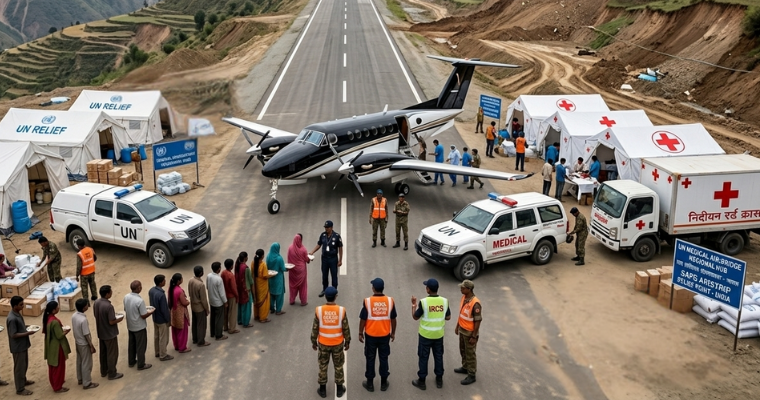
Disaster Response Charter Flights and other forms of Humanitarian Air Transport can help move essential personnel, medical teams, relief supplies and other critical resources when conventional surface transportation is delayed or difficult to use.

Air transport does not replace ground rescue teams, government agencies or established disaster-response systems. Instead, it can provide another layer of mobility when time, access and connectivity become critical.

What Does Disaster Relief Mean?


Disaster relief refers to the immediate assistance provided to people and communities affected by a disaster. The objective is to reduce suffering, protect lives and support urgent needs during and immediately after an emergency.

Disaster relief can involve government authorities, emergency responders, NGOs, humanitarian organisations, medical teams, local administrations and other response partners. The scale and nature of the response can vary considerably. Some emergencies may require large-scale public infrastructure and government-led operations, while others may require targeted transportation support to reach specific locations or teams.


Why Does Air Transport Matter During a Disaster?

The biggest advantage of aviation during an emergency is access. When a road route that normally takes several hours becomes unusable, the same movement may require a completely different logistics plan.

Government disaster-response operations have repeatedly demonstrated the importance of airlift capabilities. India’s Humanitarian Assistance and Disaster Relief framework has used aircraft to move relief materials, medical teams, rescue personnel and affected people during emergencies.

  1. Roads and bridges are inaccessible

If roads are blocked by debris, flooding or landslides, transporting essential supplies by road may take significantly longer or may not be possible at all. An aircraft can provide an alternative connection between operational airfields and areas that remain accessible by air.

  1. Relief teams need to reach an area quickly

Time matters during the early stages of an emergency. Medical teams, assessment teams, engineers, humanitarian workers and other specialists may need to reach an affected area quickly.

Humanitarian Air Transport can support the movement of these personnel when commercial transportation is unavailable or does not meet the operational requirement.

  1. Critical supplies need to move

Depending on the aircraft and operational requirements, air transport can support the movement of:

  • Medicines
  • Medical equipment
  • Food supplies
  • Drinking water
  • Emergency communication equipment
  • Shelter materials
  • Rescue equipment
  • Other priority cargo

India’s disaster-response experience includes the use of aircraft to transport rescue teams, equipment and essential relief material during major emergencies.

How Humanitarian Air Transport Supports Relief Operations

Aviation can support several stages of a disaster response rather than serving only as a means of transportation.

  • Rapid deployment

Aviation can support the movement of emergency-response personnel, assessment teams and critical supplies as part of an organised response plan.

  • On-site assessment

Before sending large quantities of supplies or personnel, responders need to understand what has happened on the ground. Aerial assessment can help identify affected areas, evaluate access conditions and support planning for subsequent relief operations.

Avenor Aviation’s disaster-relief service specifically includes on-site assessment flights intended to help assess damage, identify landing areas and support relief planning in coordination with authorities and responders.

  • Medical support

Depending on aircraft configuration, mission requirements and applicable medical protocols, aviation may support the transportation of medical teams, priority medical cargo or patients.

This is where terms such as Medical Air Evacuation, Medical Evacuation Flights and Medical Evacuation Services become relevant.

However, medical evacuation is a specialised operation. The suitability of an aircraft depends on the patient’s condition, medical equipment, onboard medical personnel, destination facilities, regulatory requirements and other operational factors. It should never be assumed that every charter aircraft is automatically configured as an air ambulance.

Relief cargo movement

In an emergency, even relatively small quantities of critical supplies can make a meaningful difference. Relief cargo handling for items such as food, water, medicines, shelter materials and equipment.

The exact cargo capacity and permitted items will depend on aircraft limitations, weight, dimensions, loading requirements, airport facilities and operational approvals.

Why Smaller Aircraft Can Have a Role in Disaster Relief

Disaster relief does not always mean sending the largest aircraft available.

A large-scale operation may require heavy-lift aircraft capable of carrying substantial quantities of equipment and supplies. At the same time, a smaller aircraft can be useful when the requirement involves fewer passengers, limited cargo or access to smaller airfields.

This can be particularly relevant when the objective is to connect with locations where larger aircraft may not operate.

Disaster Relief Is More Than Just Flying an Aircraft

One of the most important points to understand about emergency aviation is that the aircraft is only one part of the response. A successful operation requires coordination across multiple areas.

A typical planning process may consider:

  • Mission objective:What needs to be achieved?
  • Passengers:Who needs to travel?
  • Cargo:What needs to be transported?
  • Destination:What airport or airstrip can safely support the operation?
  • Aircraft:Is the aircraft suitable for the mission?
  • Medical requirements:Are patients or medical teams involved?
  • Permissions:What regulatory or local approvals are required?
  • Weather:Are the conditions suitable for safe operations?
  • Ground logistics:How will people and supplies move after landing?
  • Communication:Who will coordinate the handover on the ground?

This coordination becomes particularly important in an emergency disaster situation, where multiple organisations may be working at the same time.

Avenor Aviation’s service model highlights coordination with disaster management authorities, NGOs, hospitals and local administrations, including communication, permits and handover of supplies or personnel.

Air Transport and Ground Transport Must Work Together

It is a mistake to view air transport as a replacement for road transportation. In most humanitarian operations, the two work together.

For example:

Aircraft → Regional airport → Ground vehicle → Relief centre → Affected community

The aircraft may shorten the long-distance movement, but ground teams may still be responsible for the final delivery.

This is why a disaster management evacuation plan should consider the complete movement of people and resources rather than focusing only on the aircraft.

Similarly, a disaster evacuation map can help response teams understand routes, safe areas, transport connections and possible evacuation points.

The objective is not simply to fly closer. It is to create a practical and safe chain from the point of departure to the people who need assistance.

Who Can Use Disaster Response Air Transport?

Aviation support during a disaster may be relevant to several types of organisations, depending on the mission and applicable permissions.

These can include:

  • Disaster relief organizations
  • NGOs
  • Humanitarian organisations
  • Medical organisations
  • Emergency response teams
  • Corporate foundations involved in relief activities
  • Government-linked response initiatives
  • Relief agencies
  • Hospitals and medical teams
  • Organisations coordinating evacuation or essential-supply movement

For disaster relief organizations in India, aviation can become one component of a broader logistics plan when conventional transportation is disrupted.

The exact requirement should always be evaluated based on the emergency, operational environment and role of the organisation involved.

What Should Organisations Consider Before Arranging a Relief Flight?

Before arranging Air Charter Services in India for a humanitarian mission, organisations should establish the operational requirement clearly.

Ask these questions first:

  1. What is the immediate objective?
    Is the mission for personnel movement, supplies, medical support, assessment or evacuation?
  2. How many people need to travel?
    Passenger numbers directly influence aircraft suitability.
  3. What cargo needs to be transported?
    Weight, dimensions and handling requirements matter.
  4. Where can the aircraft safely land?
    Not every airfield is suitable for every aircraft.
  5. What is the weather situation?
    Disaster areas can have rapidly changing weather conditions.
  6. Are permissions required?
    Emergency flights may still require coordination with relevant authorities.
  7. What happens after landing?
    Ground transportation and local coordination are essential.
  8. Are there medical requirements?
    Patients may require specialised equipment, medical personnel and suitable receiving facilities.

Having these details ready can make the mission-planning process clearer and more efficient.

Frequently Asked Questions

What are Disaster Response Charter Flights?

Disaster Response Charter Flights are specially arranged air charter operations that support emergency and humanitarian missions. Depending on the requirement, they may transport relief personnel, medical teams, essential supplies, equipment or vulnerable individuals.

What is Humanitarian Relief?

Humanitarian relief is assistance provided to people affected by emergencies and disasters. It can include food, water, medical care, shelter, evacuation, rescue support and other essential services.

Why is Humanitarian Air Transport important?

Humanitarian Air Transport can provide access when roads or other transportation networks are disrupted. It can help move people and critical supplies when time and accessibility are major concerns.

Is every charter aircraft an air ambulance?

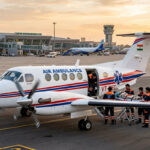
No. A charter aircraft should not automatically be considered an air ambulance. Air Ambulance in India operations and specialised air ambulance services in India involve specific medical, equipment, crew and regulatory requirements.

Can an aircraft transport relief supplies?

Yes, depending on aircraft capability, weight limitations, cargo dimensions, loading arrangements, airport facilities and applicable regulations. Avenor Aviation’s disaster-relief service includes relief cargo handling for items such as food, water, medicines, shelter materials and equipment.

Can smaller aircraft be used for humanitarian missions?

Yes, when the aircraft is suitable for the specific mission. Smaller aircraft may be useful for certain passenger, cargo or regional-airfield requirements. The decision must be based on aircraft capability, runway conditions, weather, permissions and operational planning.

Can air transport replace ground disaster relief?

No. Air transport is generally one part of a larger response. Ground transportation, local authorities, medical teams, relief organisations and other responders remain essential to complete the delivery process.

Conclusion: When Access Becomes the Problem, Aviation Can Become Part of the Solution

A disaster can change the transportation network within hours.

Roads can become inaccessible. Bridges can be damaged. Communities can become isolated. Relief teams may be ready to respond, but reaching the affected population can become the biggest challenge.

That is why aviation has an important role to play in humanitarian response.

From transporting medical teams and essential supplies to supporting assessment flights and the evacuation of vulnerable people, air transport can provide a valuable connection when conventional routes are disrupted.

But effective disaster aviation is not simply about getting an aircraft into the air. It requires careful planning, suitable aircraft, safe landing options, regulatory coordination, medical considerations and reliable ground support.

For organisations involved in disaster relief services and humanitarian services, the right aviation partner can become an important part of that wider response network.

At Avenor Aviation, disaster and humanitarian relief support is built around Safety, Reliability and coordinated response, helping organisations plan aviation support for critical missions when access matters most.

When roads are cut off, every connection matters. Sometimes, reaching people safely requires looking beyond the road.

Recent Posts